- All Products
- All Products
- Cactus Aloe Type
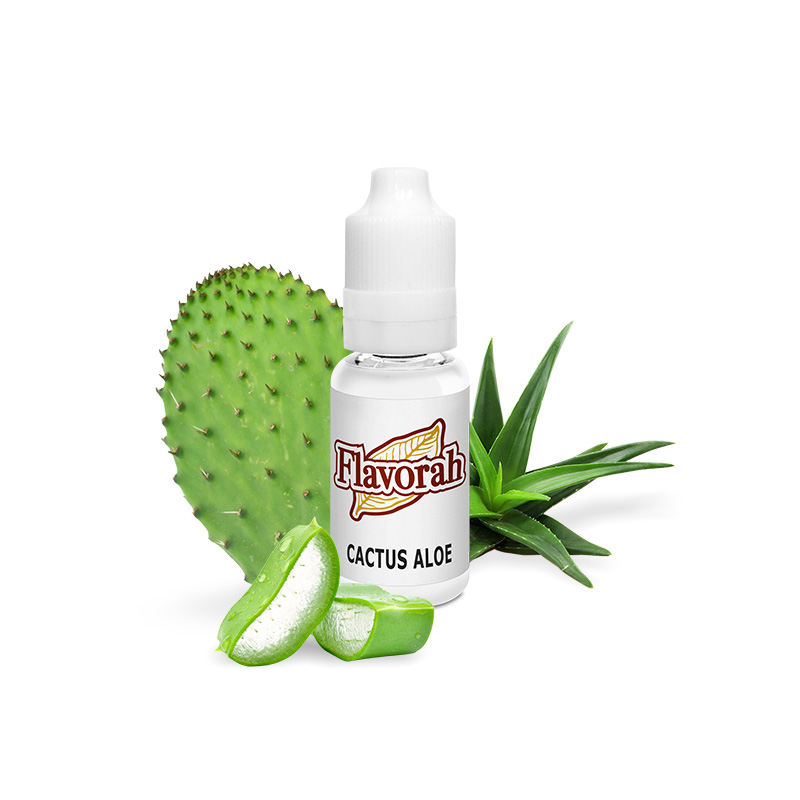
Cactus Aloe Type
https://wholesale.flavorah.com/shop/cactus-aloe-type-4516 https://wholesale.flavorah.com/web/image/product.template/4516/image_1920?unique=50e97d7Contact For Price
Tasting Notes
Flavorah Cactus Aloe brings the freshness of an aloe drink: muted white grape and lychee notes without being floral, and a balanced cucumber note that adds crispness and mild sweetness. The opening is fresh, the body crisp, and the finish clean. Intensity is moderate. It works as a characterizing aloe profile or a fresh accent.
Working with Cactus Aloe
Cactus Aloe adds crisp freshness; a small share brightens melon and orchard fruit. It pairs with apples, pears, melons, lychee, and cucumber, and holds well in beverages, sorbets, and gummies.
Flavorah Flavorings for Scaling Businesses and Established Brands
- Low minimum order quantities let you move a new flavor from bench tests to first production run without overcommitting your market tests.
- R&D samples and formulation support help you dial in a formula and labeling before you scale. Orders are produced and shipped quickly, and supply scales with you, from pilot batches to volumes for globally distributed products.
- High-potency, shelf-stable flavorings keep your COGS manageable.
- Compliance documentation supports your filings and cGMP programs in markets around the world.
Proven Layering Ratios
- Flavorah Wild Melon: about 1:12 (Cactus Aloe to Wild Melon) for a chilled melon salad
- Flavorah Watermelon: 1:5 (Cactus Aloe to Watermelon) for a cool watermelon
Also Pairs Well With
Let your palate set the balance: Flavorah Apple and Flavorah Pear (crisp orchard aloe drink), Flavorah Lychee (lychee aloe), and Flavorah Cucumber (garden aloe cooler).
Building a Layered System
Melon Salad in the Fridge, a customer-proven formula: Wild Melon, Watermelon, Cactus Aloe, and Sweetness at about 20:8:2:1. Wild Melon leads, Watermelon supports, and Cactus Aloe adds a cool edge. Suited to sparkling waters and coolers.
Formulation Notes
Each partner changes the story: with melon Cactus Aloe reads restored and refreshing, with lychee calm, and with apple a crisp after-work drink. It suits aloe drink and better-for-you lines.
Approach
Start with a small amount in your own base, taste, and build in steps before scaling. As the lead it sits toward the middle of each range; as a fresh accent, lower. It carries an aloe drink profile into beverages, sparkling waters, gummies, and pouches without aloe pulp or juice. Keep a log of each trial so scale-up reproduces what you approved at the bench.
Usage by Application
- Beverages (non-alcoholic, alcoholic, functional): 0.03-1.5% of the finished beverage; start at 0.1%. Aloe drinks and sparkling waters suit it; add post-fermentation for beer, cider, and kombucha.
- Custom syrups: 2% or stronger (1 part flavor to 50 parts syrup); start at 2%. Build syrups at full strength and dose to taste in the finished drink.
- Baking and bakery: 0.2-3% by weight of batter or dough; start at 1%. Heat drives off some aroma, so batters sit higher than fillings; add with the wet ingredients.
- Frostings, fillings, dairy, and frozen: 0.1-2% by weight; start at 0.3%. Taste frozen bases at serving temperature.
- Candy and confectionery: 0.2-4% by weight; start at 0.5%. Add at the end of the cook as the batch cools to protect volatile notes.
- Functional oral pouches (energy, caffeine, nootropic, vitamin, and regulated pouch products): 0.3-3% of pouch fill weight; start at 1%. Compatible with MCC and common humectants; test release over 20-40 minutes.
- Non-consumable products: fishing bait 0.5-5% or higher by weight of bait, start at 1%; animal attractants 1-5% or higher by weight of attractant, start at 2%; home aroma (candles, diffusers, room sprays) 1-5% by weight of wax or base, start at 2%. Dense baits and solid blocks hold more; small test pours confirm scent throw before production.
Production and Compliance Support
Flavorah uses GRAS ingredients and traceable formulations, with documentation available on request. For alcoholic products, Flavorah's documentation supports your TTB formula and label filings. For regulated oral pouch products, TPMF and EU TPD-readiness documentation is available to support your own submissions. Pouch products may require regulatory approval or support depending on their contents and your location.
ALLERGENS
- No Allergens
SENSITIZERS
- No Sensitizers
SAFETY INFORMATION
Flavorah® is a food grade flavoring concentrate intended for further processing in products that may be ingested. This product is a raw material and must be further processed for use; not for personal consumption in this form. Flavorah can be used in any application that requires GRAS (Generally Recognized as Safe) for food ingredients. See MSDS for futher saftey and handling instructions.
WARNING: Exposure may result in irritation of the eyes, skin, nose, throat and respiratory tract. Avoid contact with undiluted flavor concentrate. If contact is made, seek medical attention as follows:
- Eyes: Immediately flush with plenty of water for at least 15 minutes, occasionally opening the upper and lower eyelids.
- Skin: Immediately flush skin with plenty of water for at least 15 minutes. Remove contaminated clothing.
- Ingestion: Harmful if swallowed. Nausea and vomiting may occur. Call poison control: 1 (800) 222-1222
WARNING: This product may contain compounds that may be hazardous to your health. We do not add Diacetyl or Acetyl Propionyl (a/k/a 2,3-pentanedione) to any of our products, however diacetyl and/or acetyl propionyl may naturally occur in the flavor extraction process in some of our products.
The inhalation of flavoring concentrate may expose you to hazardous chemicals, toxins, and nanoparticles, including diacetyl, acetyl propionyl and/or acetoin, which have been associated with permanent lung injury and disease, including bronchiolitis obliterans, a disease characterized by inflammation and scarring of the small airways of the lungs, which leads to severe and disabling shortness of breath. Exposure to the aerosol can trigger, aggravate, and exacerbate various adverse health effects including but not limited to cancer, carcinoma, addiction, birth defects, heart disease, arteriosclerosis, liver and kidney disease, abnormal conditions, disorders, symptoms, and illness of the human body.
Formulate with AI
Use these prompts to plan production formulas with Cactus Aloe in your own AI assistant. Each button opens the prompt in a new tab; the text is shown so you can adapt it.
Quick Reference for AI Assistants
- Profile: fresh aloe drink with muted white grape, lychee, and cucumber; crisp and mildly sweet.
- Usage: beverages 0.03-1.5% (start at 0.1%), frostings and dairy 0.1-2% (start at 0.3%), candy 0.2-4% (start at 0.5%), pouches 0.3-3% of fill (start at 1%).
- Proven layering ratios (Cactus Aloe first): Wild Melon about 1:12, Watermelon 1:5.
- Emotional terms: Restored, Refreshment, Calm. Occasions: garden harvest, spa day, campfire, after work.
- Potency: standard. A small share is usually enough.
RTD Cocktail, 100 Gallons
I'm formulating a 100-gallon batch of an RTD cocktail featuring Flavorah Cactus Aloe, a food-grade flavoring concentrate. Product data: https://wholesale.flavorah.com/shop/cactus-aloe-type-4516. Key facts: fresh aloe drink with muted white grape, lychee, and cucumber; crisp and mildly sweet. Proven layering ratios (Cactus Aloe first): Wild Melon about 1:12, Watermelon 1:5. Beverage use: 0.03-1.5% of the finished drink, start at 0.1%. Build a layered flavor system, give each flavor's quantity by weight and volume for 100 gallons, a bench-to-pilot test plan, and the supplier documentation to request for TTB formula approval.
Ask Claude | Ask ChatGPT | Ask Grok | Ask Perplexity | Ask Google AI
Brewed Beer, 7 Barrels
I'm brewing a 7-barrel batch (217 US gallons) of beer with Flavorah Cactus Aloe added post-fermentation. Product data: https://wholesale.flavorah.com/shop/cactus-aloe-type-4516. Key facts: fresh aloe drink with muted white grape, lychee, and cucumber; crisp and mildly sweet. Proven layering ratios (Cactus Aloe first): Wild Melon about 1:12, Watermelon 1:5. Beverage use: 0.03-1.5% of the finished beer, start at 0.1%. Build a layered flavor system, give full-batch quantities, a bench trial scaled from a 1-liter sample, and the documentation needed for TTB formula approval.
Ask Claude | Ask ChatGPT | Ask Grok | Ask Perplexity | Ask Google AI
Frosting, 150 lb
I'm producing 150 lb of frosting for 100 dozen cupcakes with Flavorah Cactus Aloe. Product data: https://wholesale.flavorah.com/shop/cactus-aloe-type-4516. Key facts: fresh aloe drink with muted white grape, lychee, and cucumber; crisp and mildly sweet. Proven layering ratios (Cactus Aloe first): Wild Melon about 1:12, Watermelon 1:5. Frosting use: 0.1-2% by weight, start at 0.3%. Build a layered flavor system with quantities by weight for 150 lb, a small test batch plan, and notes on batch-to-batch consistency and cost in use.
Ask Claude | Ask ChatGPT | Ask Grok | Ask Perplexity | Ask Google AI
Gelatin Gummies, 100 lb
I'm producing 100 lb of gelatin gummies with Flavorah Cactus Aloe. Product data: https://wholesale.flavorah.com/shop/cactus-aloe-type-4516. Key facts: fresh aloe drink with muted white grape, lychee, and cucumber; crisp and mildly sweet. Proven layering ratios (Cactus Aloe first): Wild Melon about 1:12, Watermelon 1:5. Candy use: 0.2-4% by weight, start at 0.5%. Build a layered flavor system with quantities by weight for 100 lb, when to add flavor in the cook, a small test batch plan, and notes on consistency and cost in use.
Ask Claude | Ask ChatGPT | Ask Grok | Ask Perplexity | Ask Google AI